Home / Blog / On the road with us #throughserbia / Ovčar-kablar monasteries – part two

Ovčar-kablar monasteries – part two

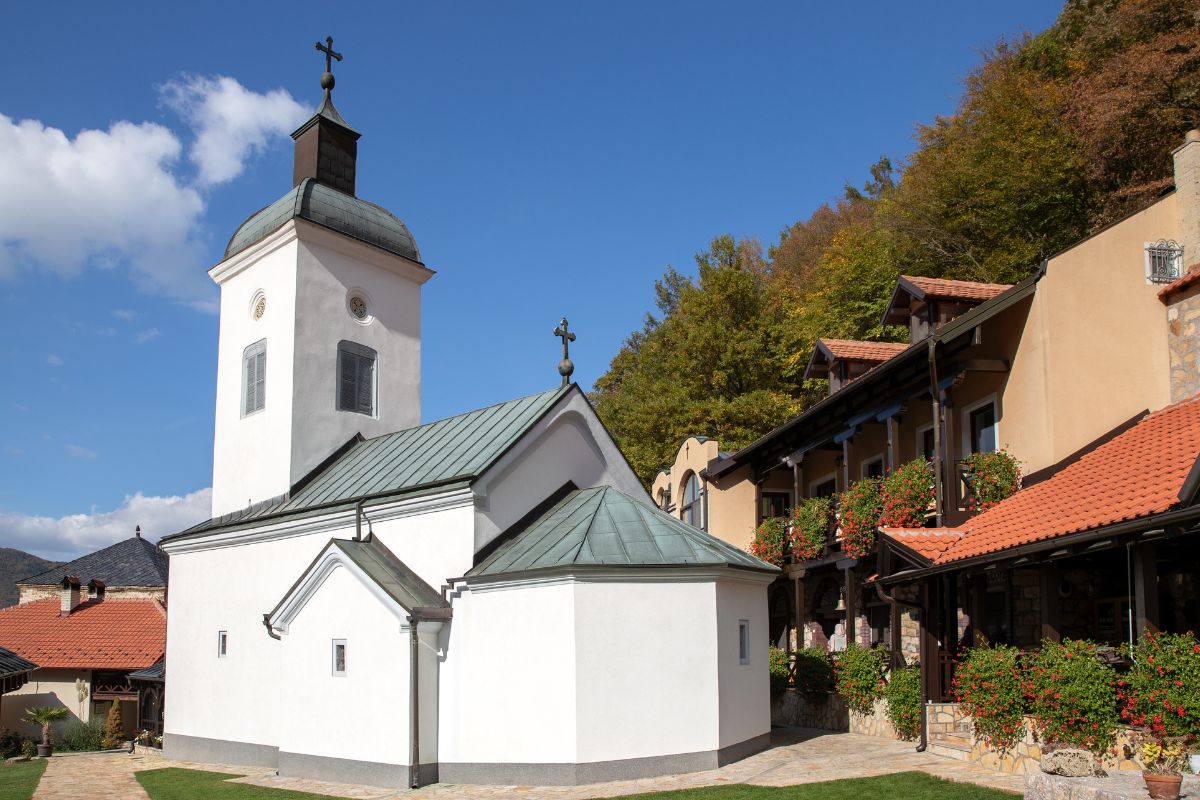
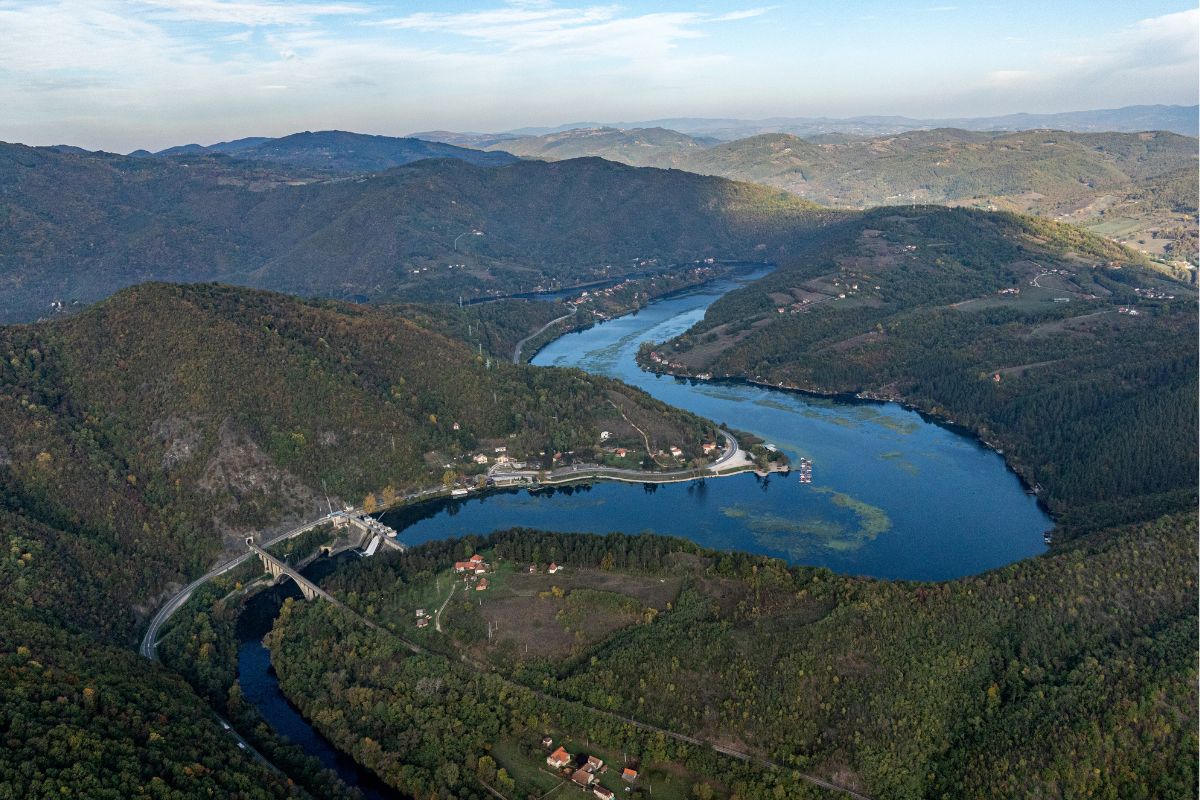
Once upon a time, when the West Morava resolved to carve its way through stone and summon a gorge into being, it seemed that Ovčar and Kablar, like two wise brothers, reached a silent accord to share the burden of sanctity. In a gesture both fraternal and fair, the left bank cradled five Orthodox shrines, while the right, nestled against the slopes of Ovčar, was graced with an equal number.
VAVEDENJE MONASTERY

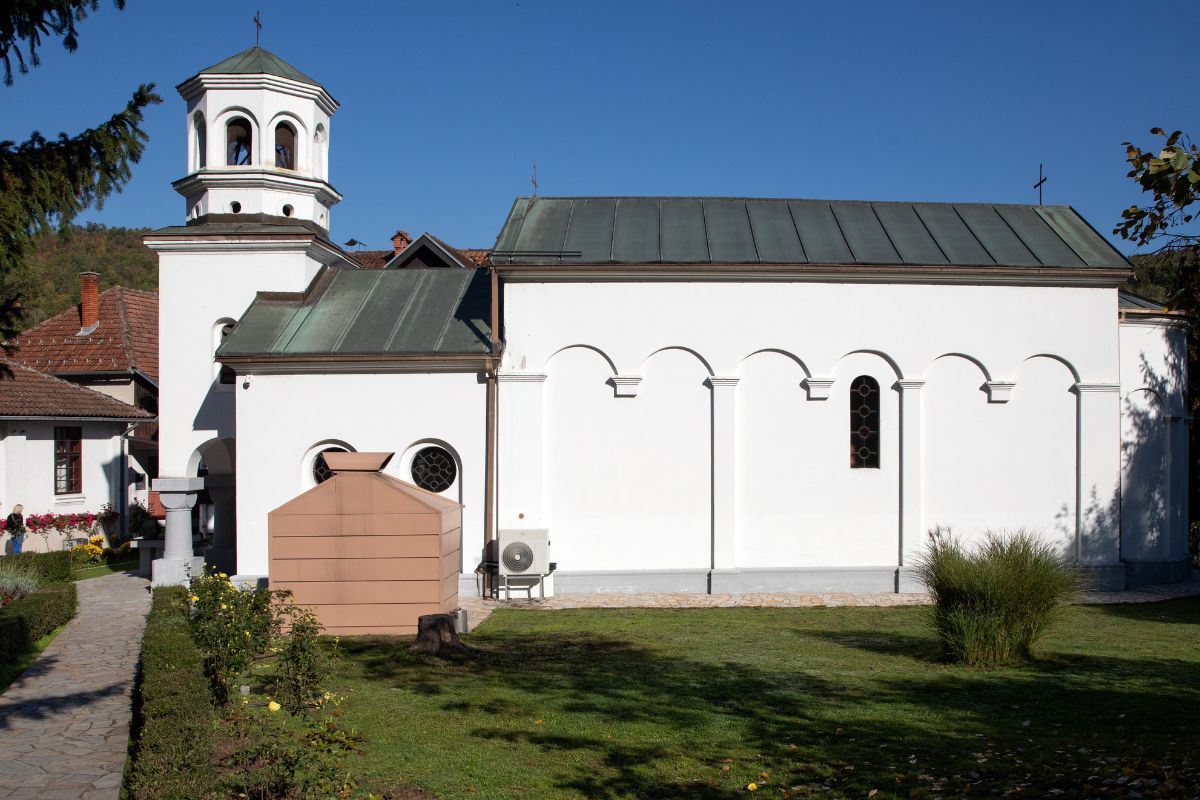
Nestled at the mouth of the gorge, right next to the road from Čačak bending into the embrace of mountains, Vavedenje Monastery rests in a garden of green and bloom. Tradition, echoed by Vuk Karadžić and Joakim Vujić, whispers that Saint Sava and his father, Stefan Nemanja, raised its walls. Yet history offers no firm foundation for this tale. The first written trace of its existence appears in Turkish records from the year 1528. A travelogue from the mid-19th century speaks of ruins across from the church, remnants of a medieval fortress, said to most probably rest upon the bones of a Roman stronghold. Time wore it down, and during the Great Migration of Serbs in 1690, the monastery itself fell into silence. Its first revival came at the close of the 18th century.

The original frescoes were destroyed. Yet today, the white church stands freshly painted. From its earlier days, only the imperial gates and the crucifix from the 18th-century iconostasis remain. Among its treasures are four gospels from 1552 and fragments of relics belonging to several saints.
PREOBRAŽENJE MONASTERY

Preobraženje Monastery was originally erected at the foot of the cliffs of Kablar, on the left bank of the West Morava. It was first mentioned in written records in 1525. Since its establishment, it has played a significant role in religious life and has been a place where books were written and copied. But around 1910, the monastery was torn down to make way for the railway. For the people of this region, it was a wound to the soul, a loss still mourned. Stories linger about misfortunes that befell those who ordered and approved its destruction.

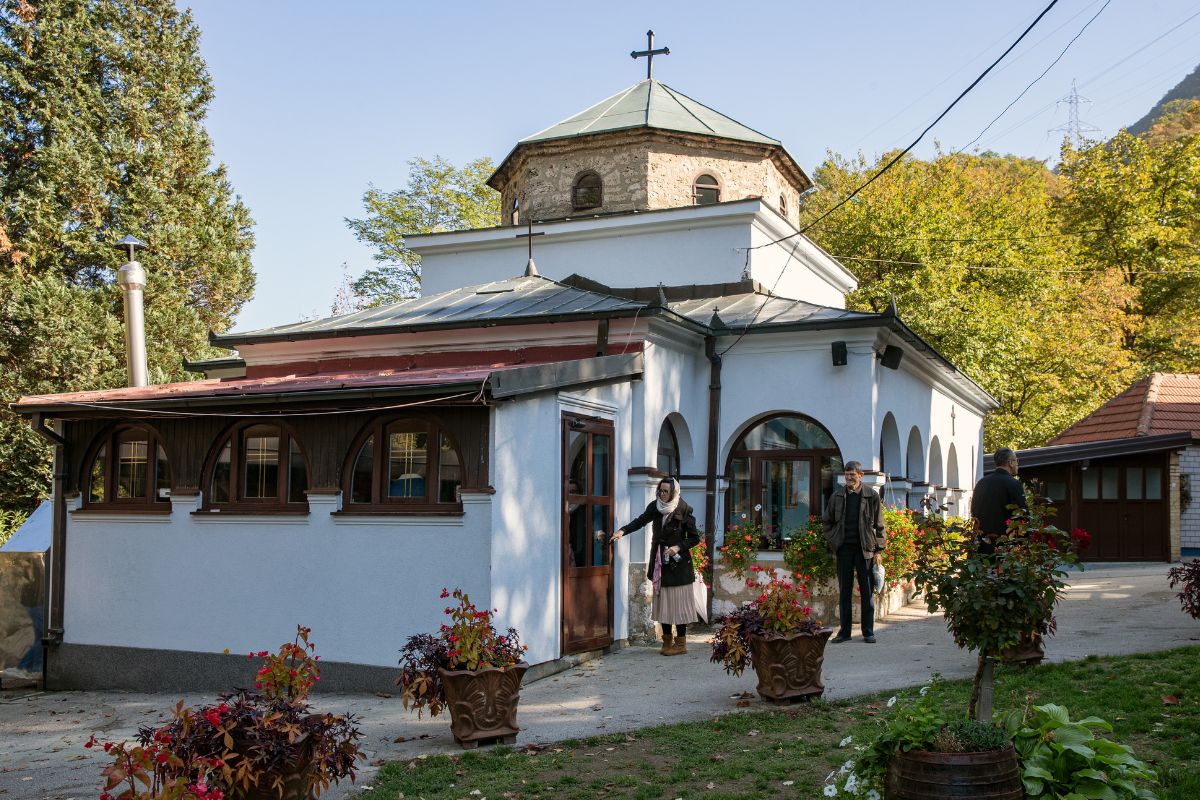
On the opposite bank of the West Morava, beneath the quiet northern slopes of Ovčar, a new monastery began to rise in 1938. The vision belonged to Saint Nikolaj Velimirović, then Bishop of Žiča. He entrusted the brotherhood with a solemn mission: “To preserve the soul of the people.”  The principle of life based on prayer and humility. The church is small – modest in size, yet rich in beauty and spiritual depth. A closed porch extends its embrace, though space remains tight. It’s always full of people. Day after day, people arrive. Drawn by prayer, confession, counsel, and the quiet hope of answers. They come seeking refuge from sorrow and strife. Many come with quiet hope – to be healed.

One of the most beautiful spiritual havens in Serbia welcomes visitors with quiet dignity. Modest attire is expected, and women are to veil their heads with scarves. Cordial monks, many of them young, are always there to offer guidance to every soul that seeks it. The atmosphere is steeped in prayer, yet vibrant with life. It feels neighbourly and quietly radiant. Here, the covenant of its holy bishop is not merely remembered – it is lived, day by day.
HERITAGE OF SAINT SAVA

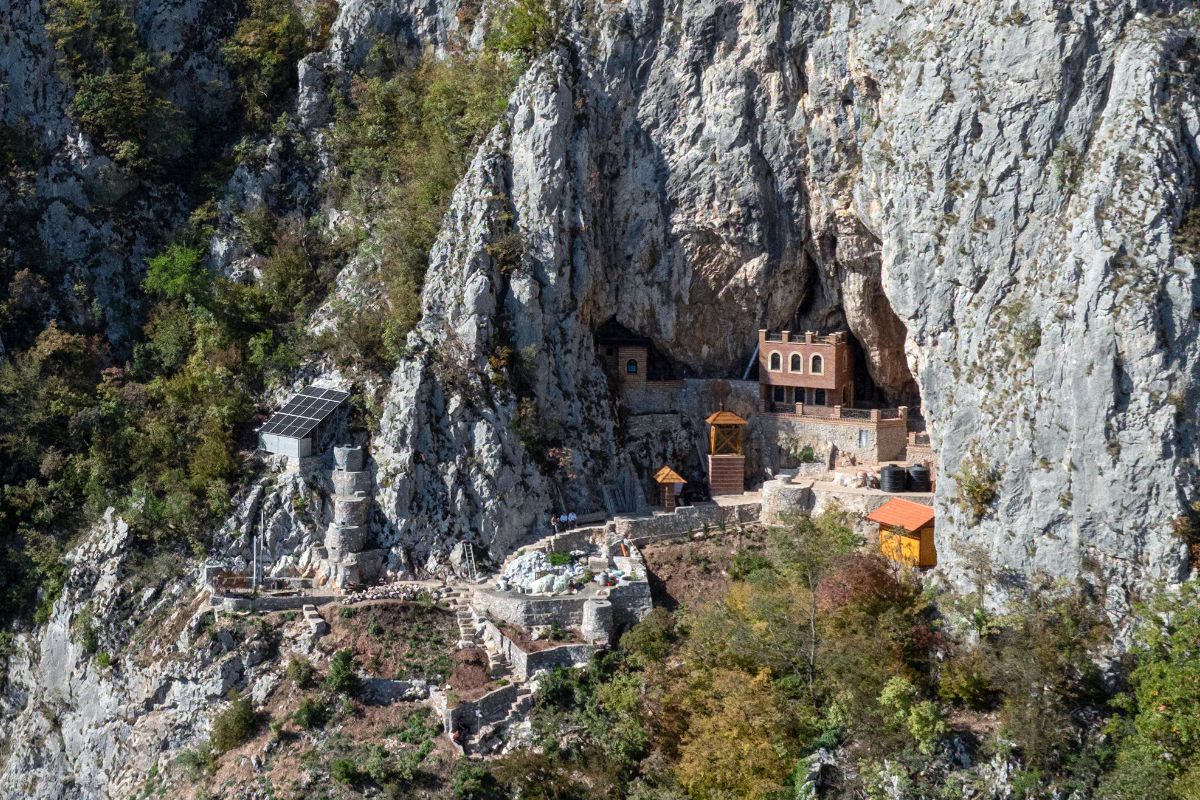
Popularly known as Savinja, it is the metoh of the Transfiguration monastery. In the steep cliffs of Kablar, high above the waters of West Morava, Saint Sava retreated. To prayer and solitude. To embrace the homeland with height, soul and faith. And leave an end to the vow of silence and assembly. So says the devotion of the people.

A winding goat’s path leads to a miracle in the rock through the forest, over rocky rocks and steep ascents. The construction of the church began in 1938, thanks to St. Nikolai Velimirović. Even today, it is being adjusted and upgraded. Many volunteers and even children take part in frequent campaigns organised by the “Ultra Runner Serbia” community, along with the monks of the Transfiguration Monastery. On the shoulders, uphill, they bring up everything necessary for construction, each according to physical abilities and age. An example of the reputation as it is created through communion, perseverance, sacrifice, and sweat for centuries and future generations.

Peace, silence, inaccessibility, that unfathomable secrecy, and all-true spiritual power, centuries-old. A place of loneliness, but never loneliness. Far from the eyes and close to the heart of believers.
VAZNESENJE MONASTERY

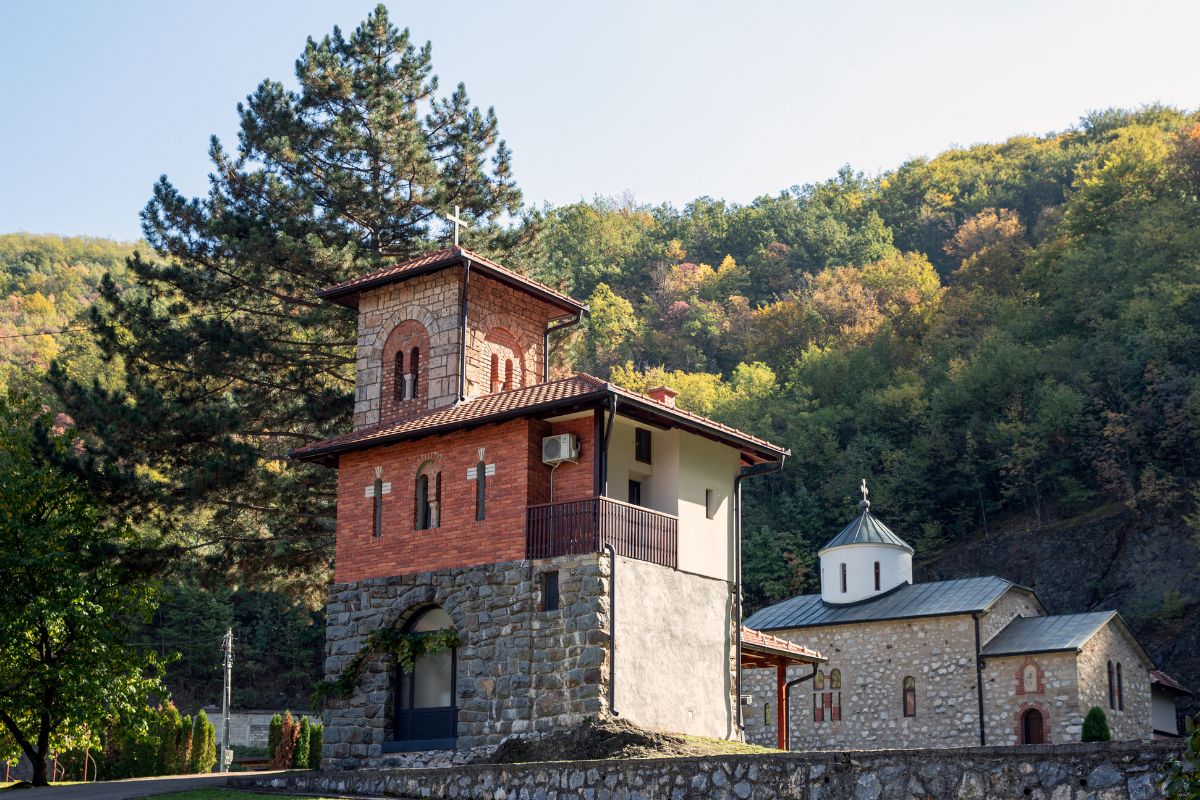
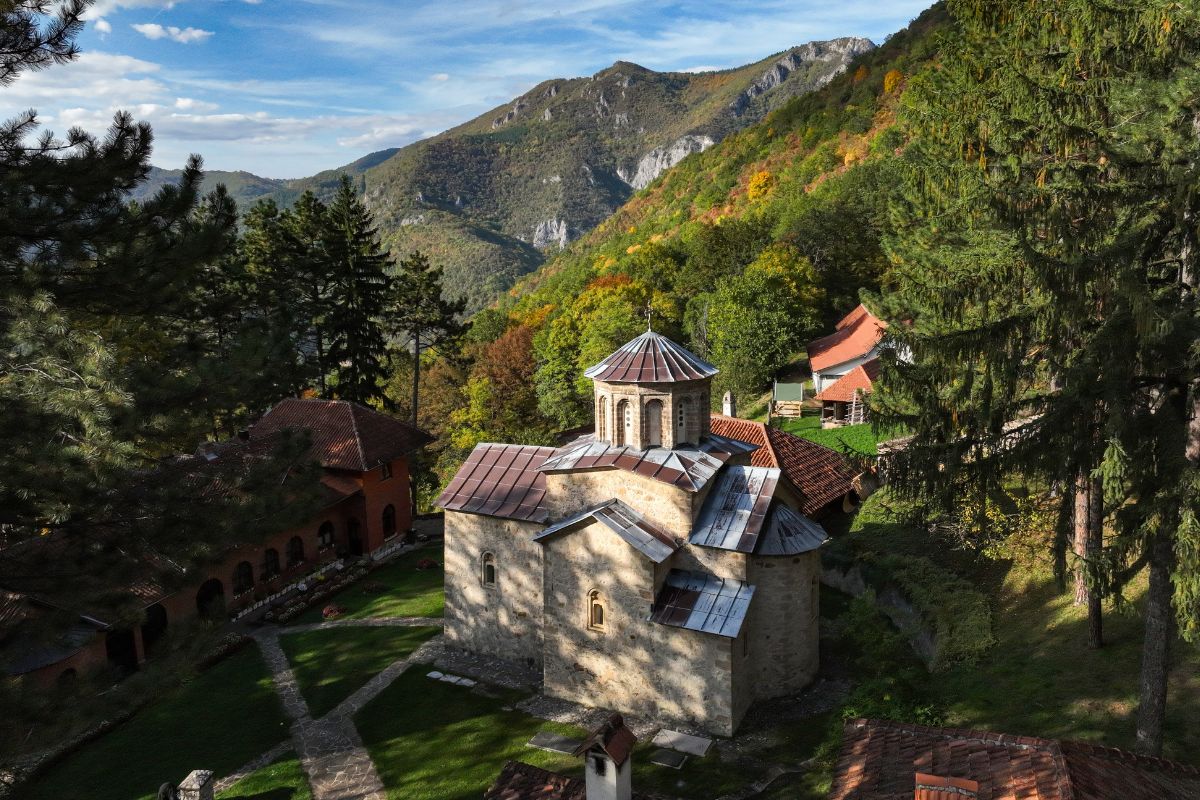
The winding road that threads through the lush northern slopes of Ovčar whispers of something unseen – a quiet magic waiting to be found. And indeed, the magic awaits. Tucked behind a high stone wall and a heavy wooden gate lies a fairytale estate, low and humble, yet steeped in grace. One side leans against a striking rock face, the other is sheltered by a wooded slope and towering trees that seem to stand watch in reverence. Among several stone-built structures, a small church gently draws the eye. All made of stone. It is believed that the monastery was built upon the foundations of an older sanctuary, though its presence is firmly attested in the 16th century through a manuscript gospel penned within its walls in 1570. Like many temples scattered through the gorge, it was most likely destroyed during the Great Migration. Its resurrection began in the 1930s, guided by the vision of Saint Nikolaj Velimirović. Today, the church stands as a simple, single-nave structure, entered from the north. The interior is covered with frescos, and a small iconostasis anchors the space, while in the narthex, two marble rosettes bloom with herbal motifs.

Silence. Peace. A hush of tranquillity, wrapped in a strange and tender familiarity. Yet, it seems desolate. Above the shepherd’s peaks, there are no souls to rise in ascension.
VIDEO

On the road through Serbia: Ovčar-kablar monasteries - Part 2 / Episode 81

SVETA TROJICA MONASTERY

The time of its founding, and the hand that first raised its walls, remain unknown. Tradition holds that monks from the nearby Sretenje Monastery built it, though others point to the hallmarks of the Raška architectural school, suggesting roots that date back to the 13th century. Its first written trace appears in 1594. Like many Orthodox sanctuaries, it was swept away in the turmoil at the close of the seventeenth century. The single-nave stone church is often hailed as the most beautiful in the gorge – a jewel of sacred architecture and one of the most significant achievements from the late 16th century. Apart from the two frescoes on the portals, the interior is not painted. However, it boasts a magnificent iconostasis crowned by a richly adorned gilded cross. Among its most precious heirlooms are two rare throne icons of exceptional worth – one of the Savior, the other of the Virgin.

It lies hidden, far from the world’s noise, wrapped in the quiet arms of the forest. Like the Ascension it honours, it seems to dwell more with nature than with people.

SRETENJE MONASTERY

Once, from the summit of Ovčar, a crown was cast into the wind: “Where the crown falls, let the sanctuary rise,” the tradition proclaims. It came to rest in a quiet valley known as Koronski Do – and there, as if by divine decree, the people raised the Sretenje Monastery. Perhaps the most beautiful in the gorge. First mentioned in the Turkish census of 1528, the Sretenje Monastery has endured centuries of hardship. It was demolished and burned more than once, and in the Allied bombing of 1944, nearly all that remained was lost to flame and rubble. The interior is graced with frescoes that together form a magnificent wall iconostasis. A marble baptistery stands in quiet dignity, alongside a 17th-century rosette carved with care, and an 18th-century icon of the Holy Virgin, radiant with timeless grace.

The courtyard of Sretenje Monastery blooms with flowers and people. Smiling nuns, gracious and serene, greet each soul with kindness. They pray alongside the weary, offer comfort to the searching, and help however they can – anyone who stops, anyone who hopes. And each day, more souls arrive. Some led by sorrow, others by joy. Drawn by suffering or by grace, they find their way to Sretenje Monastery.

Share:
Cookie management policy

About cookies

When you visit the website of Naftna industrija Srbije a.d. Novi Sad (“NIS”), www.nisgazprom.rs, we collect information necessary to enhance your user experience. These technologies, which include cookies, pixels, web beacons, and gifs, are collectively referred to as “cookies” in this Cookie Management Policy.

Information on the protection of personal data processed by NIS can be found in our Privacy Policy (link), and if you have any questions regarding the processing of personal data, please contact the organisational part of NIS responsible for managing data protection, by sending an inquiry to the e-mail address fkz@nis.eu.

By using cookies on our website, we may collect information about your computer, which may include IP address, browser type, domain name, access time and website addresses. The cookies are enabled on the website www.nisgazprom.rs only if you have given us your consent for this activity by selecting the relevant option in the setting menu under cookie management options (link to settings).

What are cookies?

Cookies are small text files that are usually downloaded to your computer, tablet or mobile device (hereinafter: “device”) from the websites you visit. Cookies are used to ensure the proper functioning of the website, to provide a better user experience, and also to enable the gathering of data about the site visits and performance and for advanced online advertising.

Types of cookies

To better understand cookies and how to control them, below you can find out what types of cookies exist, as well as how they are used on the websites:

  • First party cookies
    Cookies installed on your device by the organization whose website you are visiting are known as “first-party cookies”.
  • Third-party cookies
    Cookies installed on your device by another organisation in relation to the page you are visiting are known as “third-party cookies.
  • Persistent cookies
    Persistent cookies remain stored on your device even after you close your internet browser. With the help of these cookies, the websites store data that facilitate their use. For example, websites that require you to enter a username and password will remember your entry that will show up when you visit next time.
  • Session cookies
    Session/temporary cookies are removed from your device when you close the browser through which you visited a particular website. With these cookies, the websites store temporary data that serve to ensure their proper functioning.

Which cookies does the nisgzprom.rs website use?

Cookies used on the NIS website are divided into four categories:

  • Necessary cookies or strictly necessary cookies are cookies that are used to make the site work and cannot be turned off. You can set up your internet browser to notify you of the usage
  • or to block these cookies, but in that case, some parts of the website will not work

Other cookies – NIS uses the following permanent cookies:

  • Cookies are used to adjust the user interface when you set the language, font size, or specific version of the site (e.g. high-contrast mode). Once set up, you don’t need to specify your preferences the next time you visit this site.
  • To use the part of the site which require registration to be accessed, we place an authentication cookie on your computer. This allows you to go and return to those parts of the site without re-authentication.
  • To monitor the number of site visits with the aim to measure and improve the performance of our website, we use first-party cookies. Thanks to these cookies, we can determine which pages are popular or less popular. Also, thanks to them, we can see how visitors move through the website or how they use it. All information collected by these cookies is aggregated and used as anonymised data. If you do not allow these cookies, we will not know when you visit our website.
  • We can also use services like Google Analytics to track network statistics. In this case, Google places a third-party cookie on your computer. When we use Google Maps, the app may also set a cookie.
Cookie specification
Cookie category
Cookie name
Cookie description
Analytics cookie
1P_JAR
This cookie was created by Google and is used to detect whether the user is a human or a robot
Analytics cookie
_GRECAPTCHA
This cookie was created by Google and is used to detect whether the user is a human or a robot
Analytics cookie
ANID
This cookie was created by Google and is used to detect whether the user is a human or a robot
Analytics cookie
CGIC
This cookie was created by Google and is used to detect whether the user is a human or a robot
Analytics cookie
CGIC
This cookie was created by Google and is used to detect whether the user is a human or a robot
Analytics cookie
DV
This cookie was created by Google and is used to detect whether the user is a human or a robot
Analytics cookie
NID
This cookie was created by Google and is used to detect whether the user is a human or a robot
Analytics cookie
OGPC
This cookie was created by Google and is used to detect whether the user is a human or a robot
Analytics cookie
OGP
This cookie was created by Google and is used to detect whether the user is a human or a robot
Analytics cookie
OTZ
This cookie was created by Google and is used to detect whether the user is a human or a robot
Analytics cookie
SNID
This cookie was created by Google and is used to detect whether the user is a human or a robot
Analytics cookie
_c;;i
This cookie was created by Google and is used to detect whether the user is a human or a robot
Analytics cookie
rc::a
This cookie was created by Google and is used to detect whether the user is a human or a robot
Analytics cookie
sb_wiz.pq
This cookie was created by Google and is used to detect whether the user is a human or a robot
Analytics cookie
sb_wiz.pq_tm
This cookie was created by Google and is used to detect whether the user is a human or a robot
Analytics cookie
sb_wiz.qc
This cookie was created by Google and is used to detect whether the user is a human or a robot
Analytics cookie
sb_wiz.zpc.
This cookie was created by Google and is used to detect whether the user is a human or a robot
Analytics cookie
_grecaptcha
This cookie was created by Google and is used to detect whether the user is a human or a robot
Necessary
authToken
A cookie used to authorize a logged in user
Necessary
authTokenData
A cookie containing the system data of the logged in user
Necessary
refreshToken
A cookie used to authorize a logged in user
Necessary
cookie_consent_settings
A cookie that stores information about which cookies are accepted by the user.

Turn cookies on and off

Nisgazprom.rs website allows the user to accept or decline the cookies at any time by changing the settings in the offered cookie management options. If you decline the cookies, they will not be stored in your internet browser. Cookies can also be decline via Internet browser settings.

The purpose of cookies is to improve and enable the use of our website and its processes, and one should bear in mind that by preventing or deleting cookies you can disable the functioning of all parts of the site or cause them to work and look different in your browser.

If you decline targeting cookies, it is possible that our ads will show less relevant content for you, or the same ad may be shown to you more times than you wish.

Internet browsers allow you to change cookie settings. The settings are usually found in the “Options” menu. “Options” or “Parameters”. “Preferences”). The links below may be helpful if the user wants to better understand these settings:

For an additional source of information on cookie management, you can use the website
www.aboutcookies.org.

Additional information about cookies

Social networks may also place cookies on your computer. This happens on websites that allow you to log in and register through social media accounts, and when you share the content of the website on social media. The specific impact on your privacy will vary from one social network to another and depends on the privacy settings you choose on those networks. You can find out how to manage the cookies on the websites of these social networks.

You can find out more information about cookies and privacy policies at the following links: