Home / Blog / On the road with us #throughserbia / Ovčar–kablar monasteries – part one

Ovčar–kablar monasteries – part one

Serbia does not have just one, but two of its own “Holy Mountains.” One is the pride of Fruška Gora, the other of the country’s rugged west. In the gorge once carved by the West Morava River, which parted two companions – Ovčar from Kablar – there arose fewer Orthodox shrines than on the Vojvodina mountain, yet ones no less monumental.
Ovćarsko-kablarska klisura manastiri

In dense forests, on steep slopes and rocky peaks of what were once nearly impassable lands, monks sought refuge – and found inspiration. Most likely this happened after the Battle of Maritsa in 1371. There are, however, no reliable written records of the time of their founding or their patrons. Those were centuries of suffering and deprivation, marked by raids and oppression. By the eve of the Second World War most of the monasteries had fallen into neglect, until many were revived by Bishop Nikolaj Velimirović of Žiča. Today they are all linked by the road through the Ovčar–Kablar Gorge. The river’s left bank has strung together five pearls.

BLAGOVEŠTENJE (ANNUNCIATION)

Nestled just above Ovčar Banja, at the foot of wooded Kablar, this is one of the few monasteries in the gorge whose date of origin is reliably known. It was erected in the early seventeenth century on existing foundations, in the spirit of the Raška school, and is considered one of the most beautiful in the area.

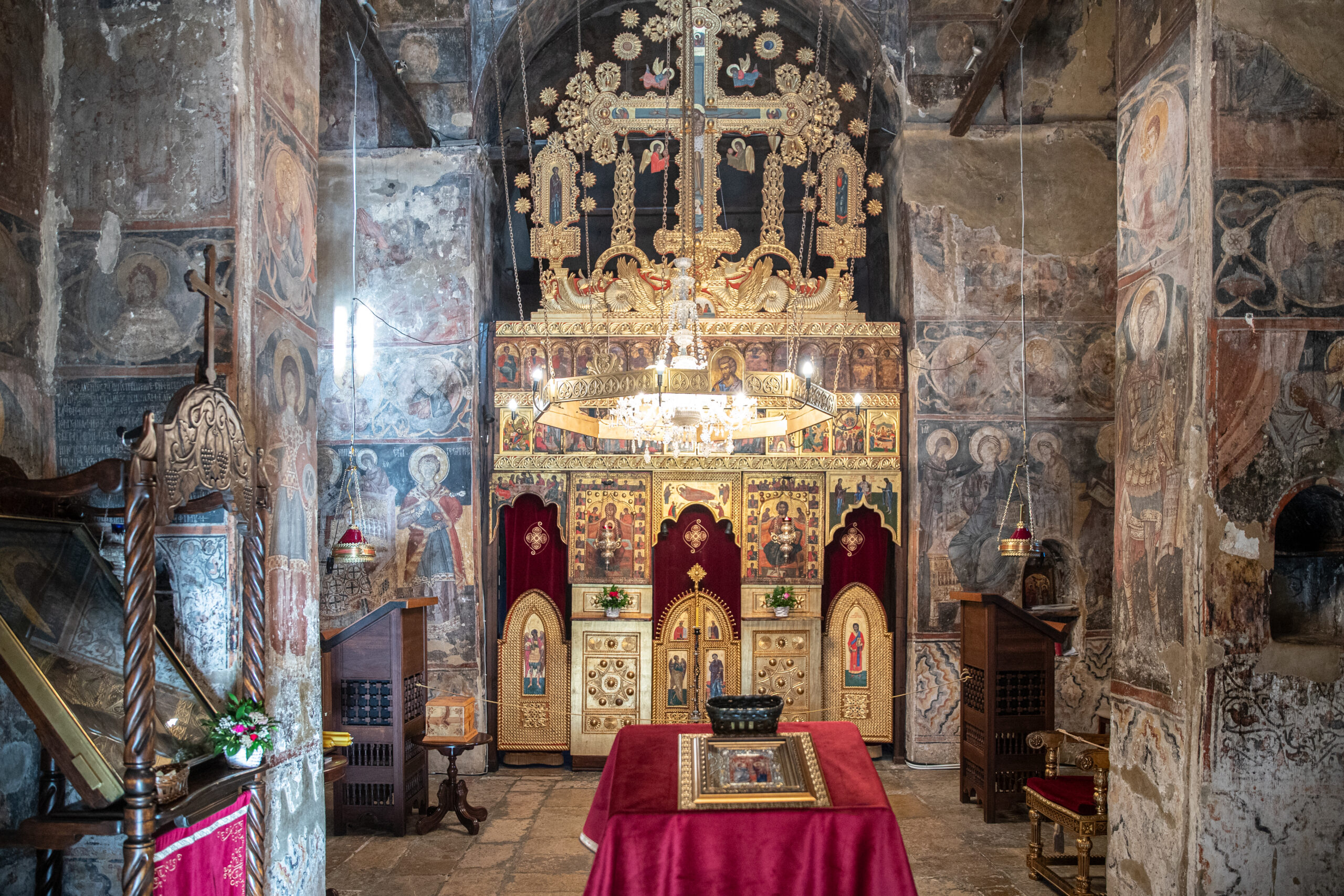
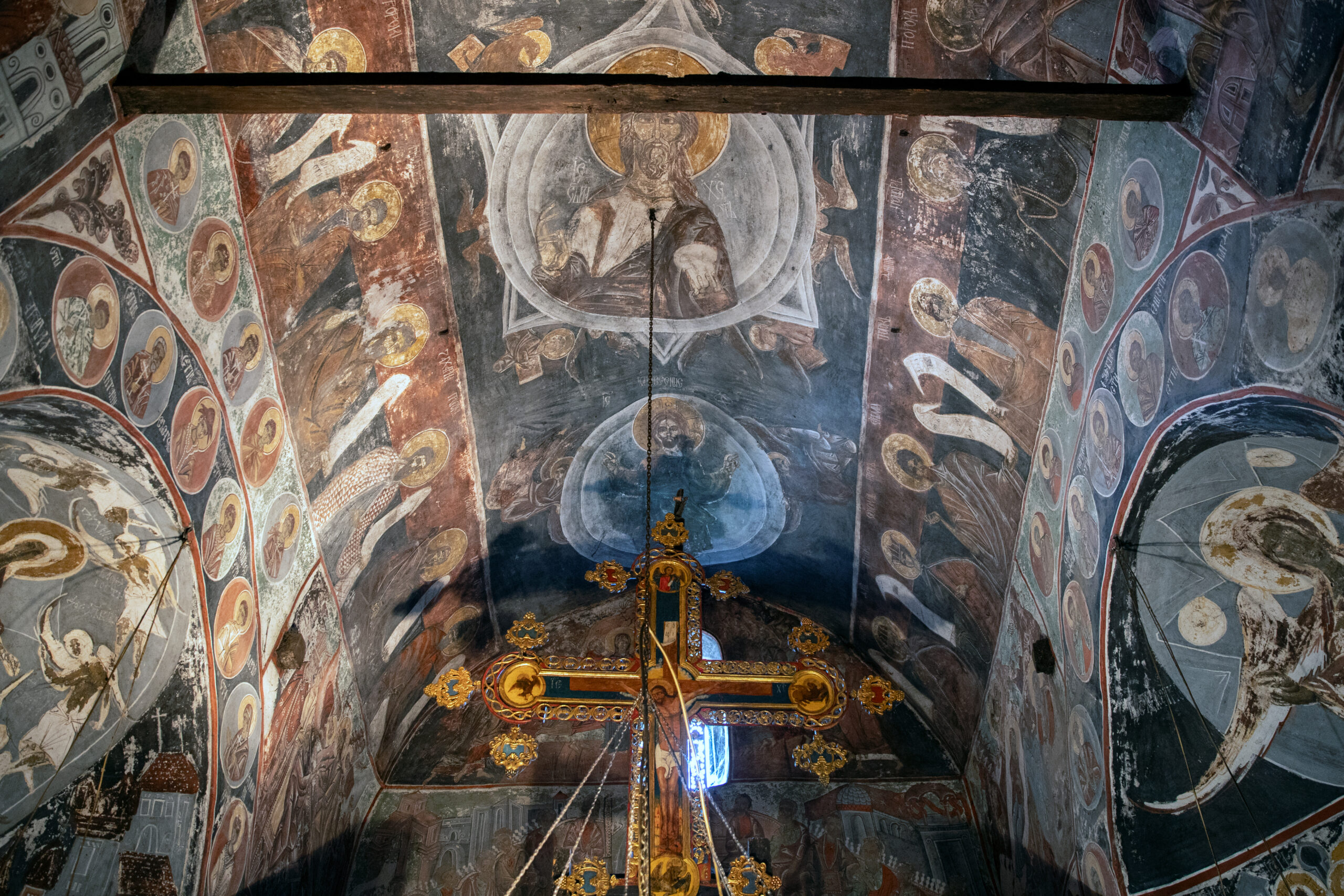
Its frescoes date from the first half of the seventeenth century. They are the work of the renowned iconographer Mitrofan. Painted in a time of great poverty for the Serbs under the Ottomans – “sorrowful and needy,” as one chronicle puts it – ochre and red predominate, while blue is scarcely present. Yet thanks to the masterful hand of the painter, the ensemble ranks among the finest examples of Serbian wall painting from the first half of the seventeenth century. Especially noteworthy are the icon of the Most Holy Theotokos Hodegetria, believed to be wonder–working, and the magnificent gilded iconostasis, restored in the late twentieth century.

Patriarch Pavle spent several years at Blagoveštenje, where he took monastic vows. It is as if he bequeathed to it his gentleness, modesty, serenity, and above all his closeness to the people – earthly, yet prayerful and dignified. Simple, with omnipresent beauty.
ILINJE

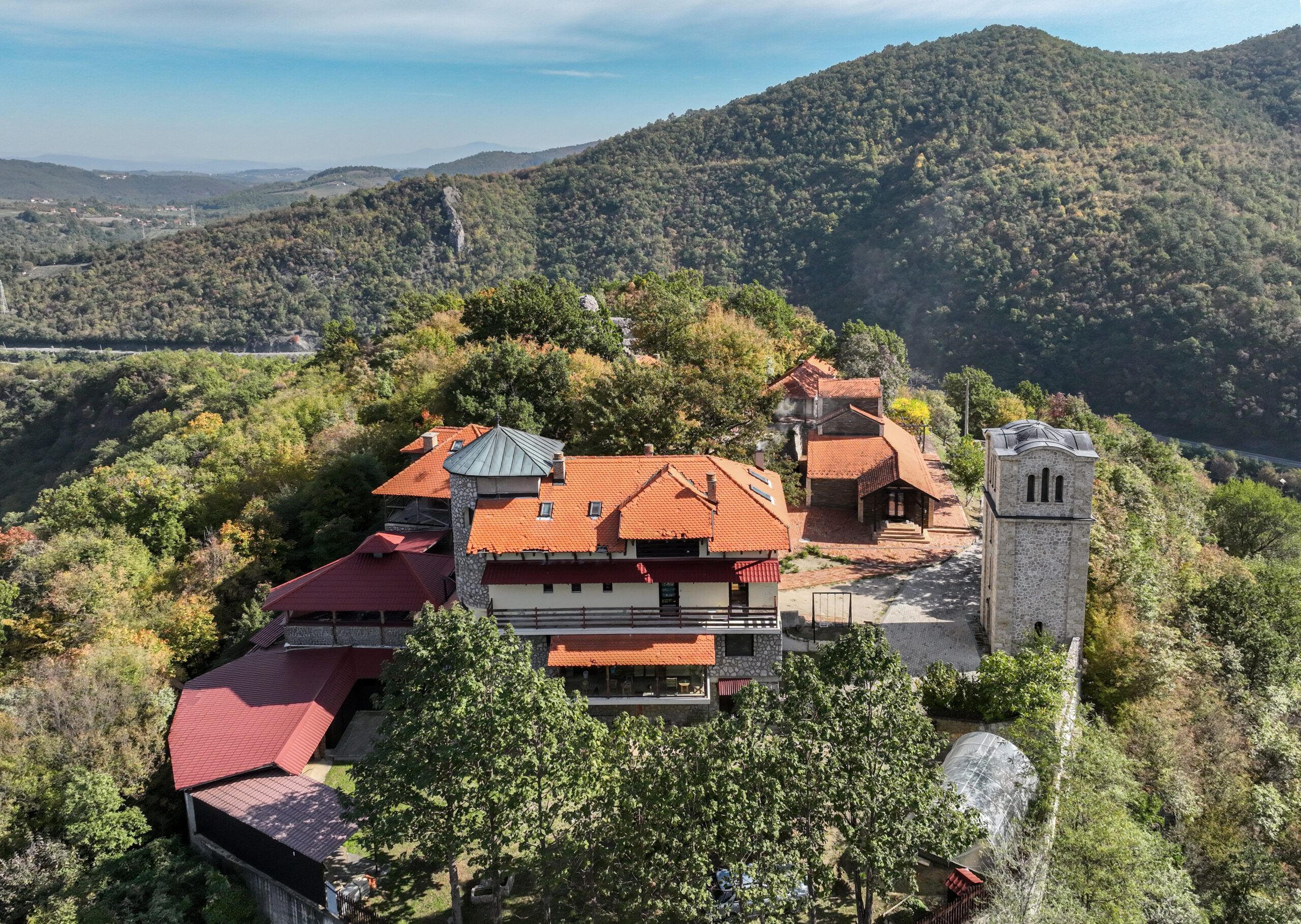
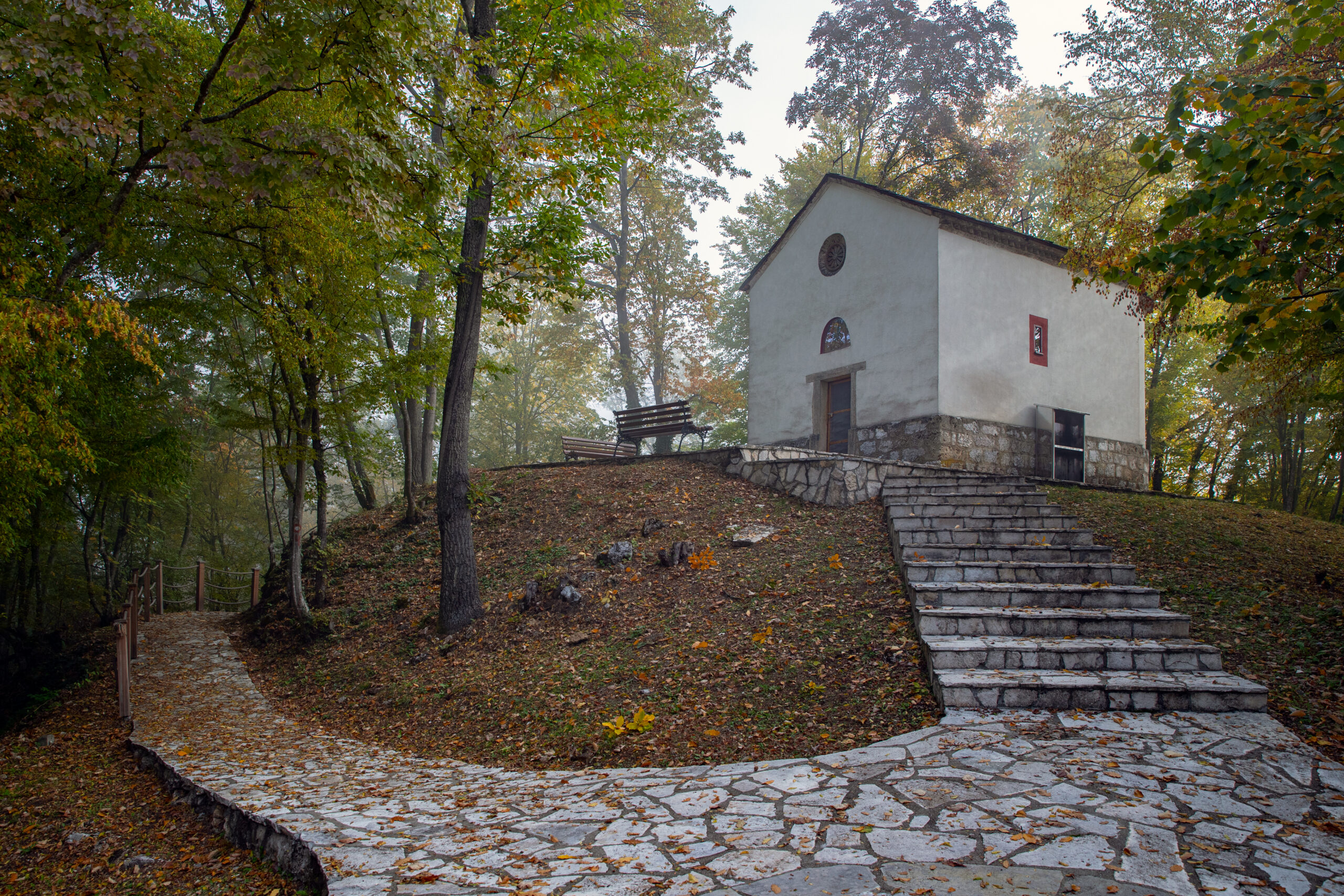
On a nearby little hill, tucked away in untouched, picturesque nature, lies Ilinje, dedicated to the Prophet Elijah. There are no records of the founder or the time the church was built. ecause of its proximity to Blagoveštenje, it is assumed to have been raised as its metochion (dependency) and to have housed a monastic manuscript school. Next to the tiny single–nave stone church, restored in 1939, a wooden bell tower was erected. Ilinje still has no monastic quarters, so the church is kept locked – yet it is very much worth a visit.
JOVANJE

Jovanje graces the largest meander of the West Morava, at the foot of Jovanje Hill. It is first mentioned in an Ottoman tax register around 1540. Tradition, however, says it was founded by monks from Mount Athos “before Kosovo.” According to the notes of Vuk Karadžić, it was a lavra and, in size and beauty, the foremost of the Kablar monasteries. It was plundered and destroyed several times, and in the mid–twentieth century it was relocated due to the construction of the Međuvršje hydroelectric plant. The nuns moved the monastic cemetery, as well as the stones and columns of the old church. The new church was consecrated in 1959. The interior is frescoed, and the iconostasis and certain icons are adorned with flowers – somewhat unusual.

It is known for the wonder–working icon of the Mother of God of Jovanje. The “Brzopomoćnica” (Mother of God, Quick to Hear) icon was gifted to the church by the monastery’s spiritual father, Seraphim the Russian, in 1917. It has comforted many in misfortune and healed the sick.
NIKOLJE

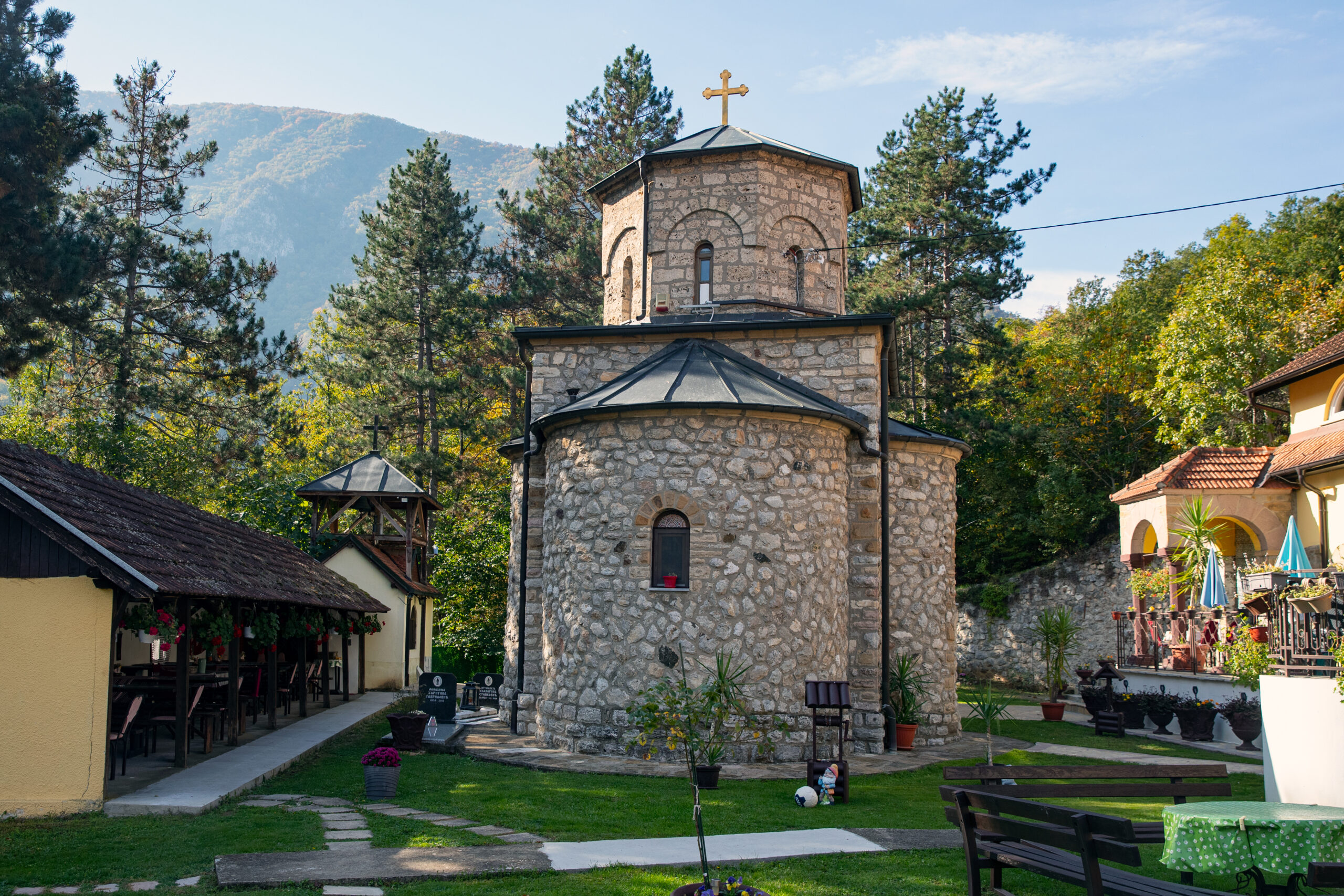
Right on the bank of the West Morava, not far from Ovčar Banja, rises one of the oldest monasteries in the gorge. The exact date of its founding is unknown; the earliest written trace found so far dates to 1489. One distinctive feature of the single–nave stone church is its entrance on the south side. The interior is adorned with magnificent frescoes from the sixteenth and seventeenth centuries, along with several later ones from the nineteenth century.

Beside the church stands Miloš’s konak, which Prince Miloš Obrenović built and where he sheltered his family after the collapse of the First Serbian Uprising. In the courtyard, like a holy relic, a sacred pine withstands the passage of time. According to folk belief, the two–hundred–year–old giant has healing power. Tradition also holds that Miloš’s son Petar, who died in childhood, is buried there.

Although it has often been a target for the ill–intentioned, it has never fallen into neglect. The candle in Nikolje has always been burning.
VIDEO

On the road through Serbia: Ovčar-kablar monasteries - Part 1 / Episode 80

USPENJE (DORMITION)

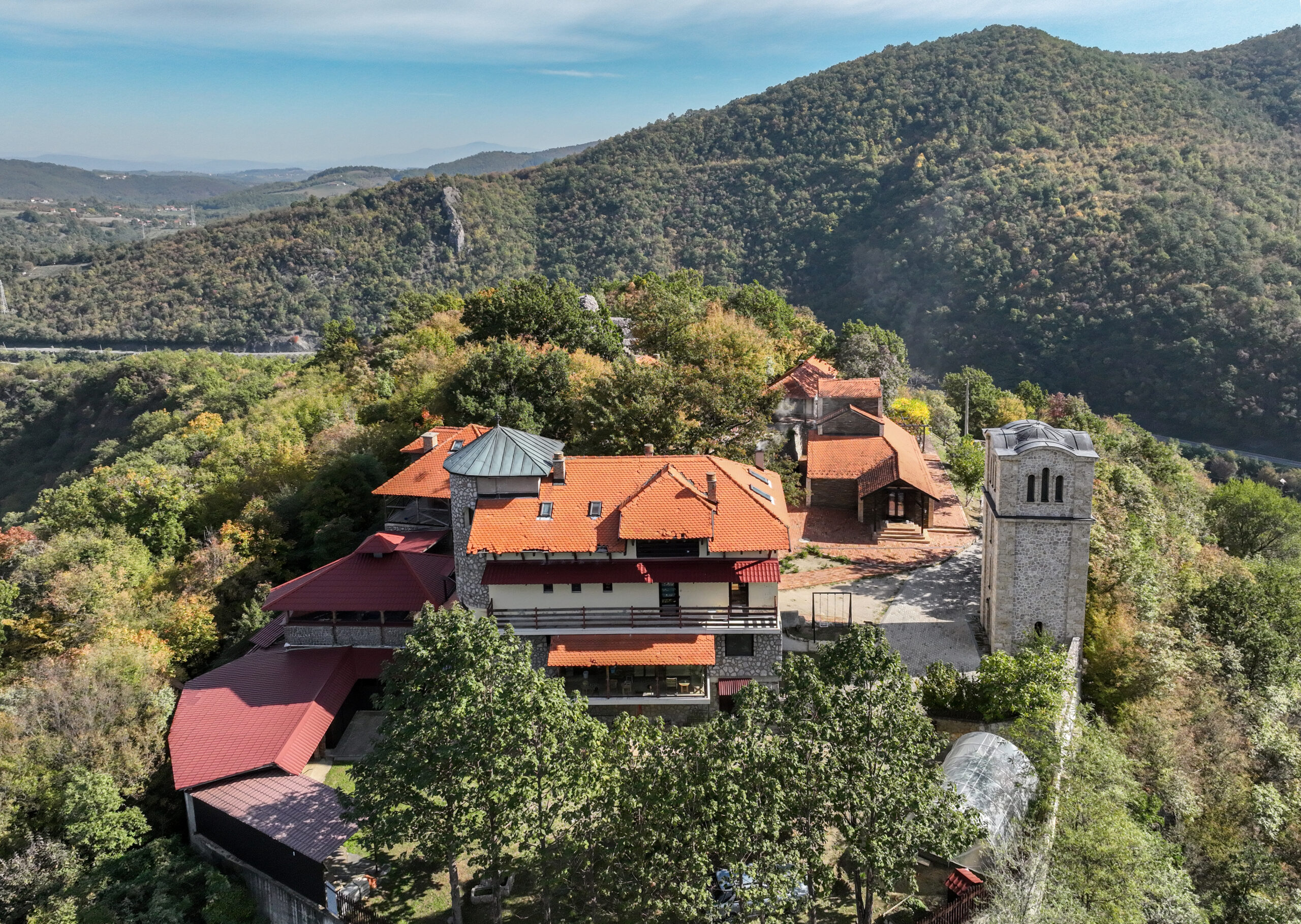
Visible from every side of the gorge, the monastery is dedicated to the Mother of God. The church was built before the Second World War. Its architecture is unusual, modeled on medieval endowments of high–ranking ecclesiastical dignitaries of Ohrid. The interior was never fresco–painted; the altar screen is enriched with icons. For nearly half a century it stood empty and neglected as a metochion (dependency) of Jovanje, until the early twentieth century when work began on restoring and furnishing the church, the residence, and the entire monastery complex.

At the time of writing (September–October 2025) it is closed to visitors due to new works. The faithful may attend the Divine Liturgy, celebrated on Sunday mornings.

KAĐENICA – THE CAVE SANCTUARY

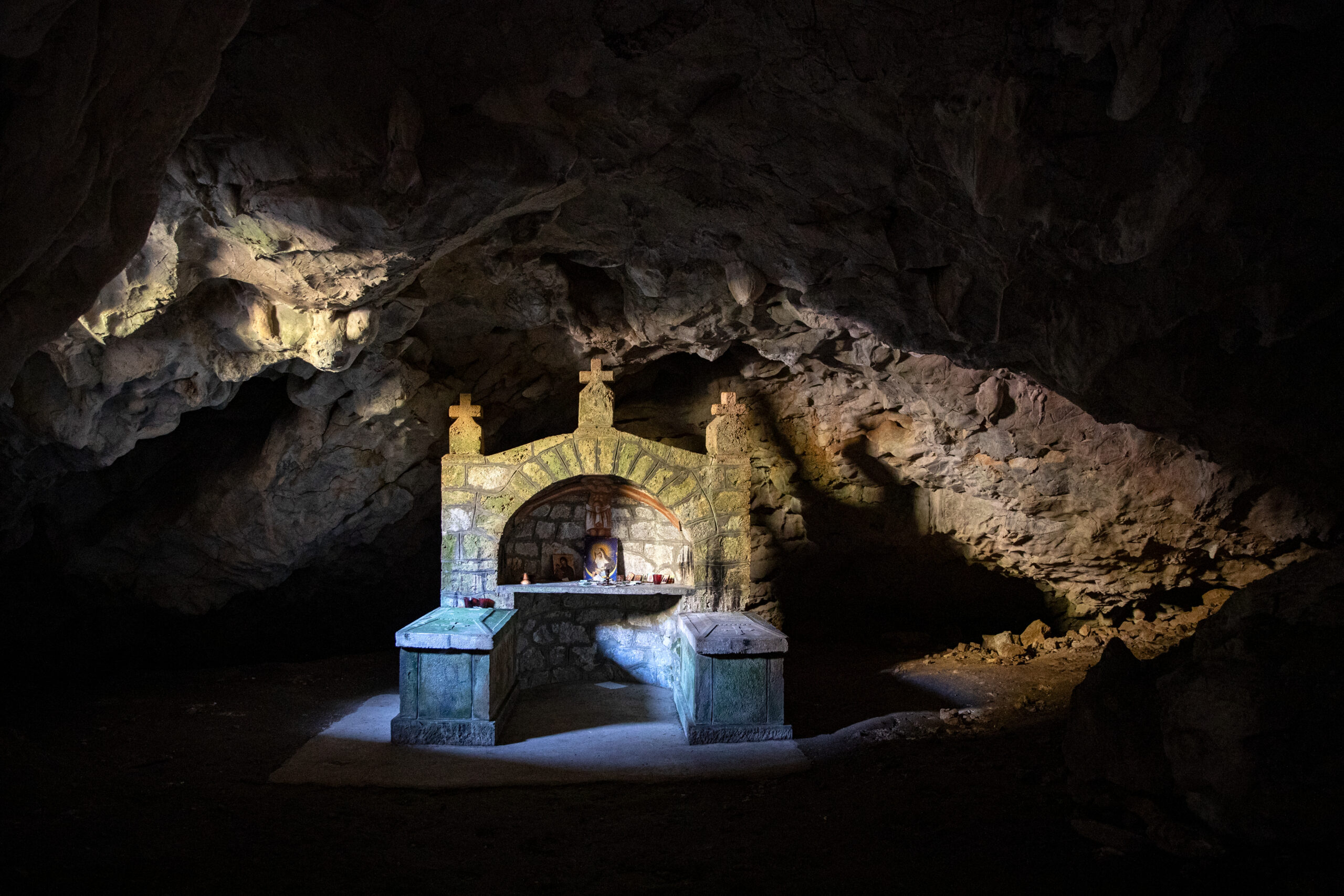
It is named for the smoke (from incensing), for in the spring of 1815 the Turks suffocated within it a group of villagers who had fled there from the surrounding area. When, in those days of reprisals and harsh oppression, their hiding place was discovered, brushwood and straw were heaped at the cave entrance and set alight. Bones lay scattered throughout the cave until arrangements for its restoration began through the efforts of Bishop Nikolaj of Žiča in the mid-1930s. The remains were laid in two stone sarcophagi, between which an altar apse was built. In it, small icons and vigil lamps are left for the repose of innocent souls. It is presumed that between 500 and 600 people perished, among them many children and the elderly. Bones of domestic animals were also found.

The cave lies not far from the Monastery of Blagoveštenje, on the right bank of the West Morava. The approach is a dirt path through wooded countryside. The site is well marked, maintained, and clean. Steep stone steps lead up to one of the most historically significant underground chambers. At the top, beside rocks where traces of soot can still be seen in places, a tall cross was placed. There are wooden doors at the entrance.

Inside it is cramped, cold – at moments eerie. Less from fear of what lurks in the depths of the dark, and more from the thought of the last moments of hundreds of unarmed souls. They sought a hiding place and found an eternal resting place.

It holds the status of a church and memorial ossuary. Monks from the nearby Monastery of Preobraženje serve a commemoration there every year on Vidovdan (St. Vitus Day).

A PIT STOP AT THE PS ČAČAK 1

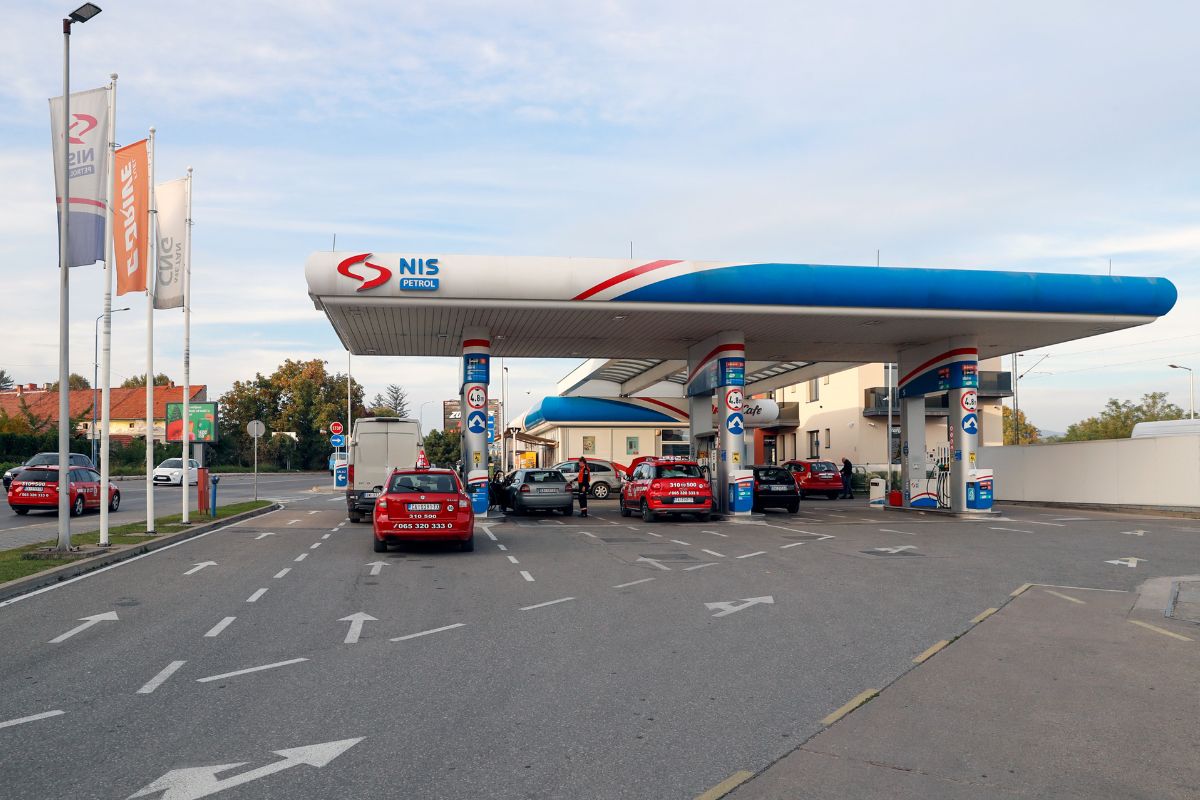
What a day! A walk through history; enchantment with art; the coexistence of fairy-tale nature and the spirituality of heritage sites. The warmth of the faithful and the blessings of nuns and monks. Our four-wheeled companion guided us faithfully through steep climbs, bends, and many challenges of the canyon landscape. It deserves a reward. We give it top-quality fuel at the NIS petrol station in Čačak – so it can eagerly hasten on to visit the Serbian holy places on the right bank of the West Morava.

Share:

Možda te dodatno interesuje:

Drive Cafe Means a Quality Break

When you're looking for a place to take a quality break filled with delightful flavors and warmth, visit one of over 300 Drive Cafe locations across the country. Enjoy premium coffee and choose from a rich selection of food – exclusively at NIS Petrol and Gazprom gas stations!

LEARN MORE

Jazak Water – A Natural Source of Freshness!

No matter how far you travel, water is an invaluable companion on your journey. Every sip, no matter how small, is essential for maintaining your body's optimal hydration. That's why Jazak spring water is truly priceless – always within reach, ready to quench your thirst at any moment. Coming directly from the untouched nature of Fruška Gora, it's pure and refreshing – the ideal travel companion for all your adventures.

LEARN MORE
Cookie management policy

About cookies

When you visit the website of Naftna industrija Srbije a.d. Novi Sad (“NIS”), www.nisgazprom.rs, we collect information necessary to enhance your user experience. These technologies, which include cookies, pixels, web beacons, and gifs, are collectively referred to as “cookies” in this Cookie Management Policy.

Information on the protection of personal data processed by NIS can be found in our Privacy Policy (link), and if you have any questions regarding the processing of personal data, please contact the organisational part of NIS responsible for managing data protection, by sending an inquiry to the e-mail address fkz@nis.eu.

By using cookies on our website, we may collect information about your computer, which may include IP address, browser type, domain name, access time and website addresses. The cookies are enabled on the website www.nisgazprom.rs only if you have given us your consent for this activity by selecting the relevant option in the setting menu under cookie management options (link to settings).

What are cookies?

Cookies are small text files that are usually downloaded to your computer, tablet or mobile device (hereinafter: “device”) from the websites you visit. Cookies are used to ensure the proper functioning of the website, to provide a better user experience, and also to enable the gathering of data about the site visits and performance and for advanced online advertising.

Types of cookies

To better understand cookies and how to control them, below you can find out what types of cookies exist, as well as how they are used on the websites:

  • First party cookies
    Cookies installed on your device by the organization whose website you are visiting are known as “first-party cookies”.
  • Third-party cookies
    Cookies installed on your device by another organisation in relation to the page you are visiting are known as “third-party cookies.
  • Persistent cookies
    Persistent cookies remain stored on your device even after you close your internet browser. With the help of these cookies, the websites store data that facilitate their use. For example, websites that require you to enter a username and password will remember your entry that will show up when you visit next time.
  • Session cookies
    Session/temporary cookies are removed from your device when you close the browser through which you visited a particular website. With these cookies, the websites store temporary data that serve to ensure their proper functioning.

Which cookies does the nisgzprom.rs website use?

Cookies used on the NIS website are divided into four categories:

  • Necessary cookies or strictly necessary cookies are cookies that are used to make the site work and cannot be turned off. You can set up your internet browser to notify you of the usage
  • or to block these cookies, but in that case, some parts of the website will not work

Other cookies – NIS uses the following permanent cookies:

  • Cookies are used to adjust the user interface when you set the language, font size, or specific version of the site (e.g. high-contrast mode). Once set up, you don’t need to specify your preferences the next time you visit this site.
  • To use the part of the site which require registration to be accessed, we place an authentication cookie on your computer. This allows you to go and return to those parts of the site without re-authentication.
  • To monitor the number of site visits with the aim to measure and improve the performance of our website, we use first-party cookies. Thanks to these cookies, we can determine which pages are popular or less popular. Also, thanks to them, we can see how visitors move through the website or how they use it. All information collected by these cookies is aggregated and used as anonymised data. If you do not allow these cookies, we will not know when you visit our website.
  • We can also use services like Google Analytics to track network statistics. In this case, Google places a third-party cookie on your computer. When we use Google Maps, the app may also set a cookie.
Cookie specification
Cookie category
Cookie name
Cookie description
Analytics cookie
1P_JAR
This cookie was created by Google and is used to detect whether the user is a human or a robot
Analytics cookie
_GRECAPTCHA
This cookie was created by Google and is used to detect whether the user is a human or a robot
Analytics cookie
ANID
This cookie was created by Google and is used to detect whether the user is a human or a robot
Analytics cookie
CGIC
This cookie was created by Google and is used to detect whether the user is a human or a robot
Analytics cookie
CGIC
This cookie was created by Google and is used to detect whether the user is a human or a robot
Analytics cookie
DV
This cookie was created by Google and is used to detect whether the user is a human or a robot
Analytics cookie
NID
This cookie was created by Google and is used to detect whether the user is a human or a robot
Analytics cookie
OGPC
This cookie was created by Google and is used to detect whether the user is a human or a robot
Analytics cookie
OGP
This cookie was created by Google and is used to detect whether the user is a human or a robot
Analytics cookie
OTZ
This cookie was created by Google and is used to detect whether the user is a human or a robot
Analytics cookie
SNID
This cookie was created by Google and is used to detect whether the user is a human or a robot
Analytics cookie
_c;;i
This cookie was created by Google and is used to detect whether the user is a human or a robot
Analytics cookie
rc::a
This cookie was created by Google and is used to detect whether the user is a human or a robot
Analytics cookie
sb_wiz.pq
This cookie was created by Google and is used to detect whether the user is a human or a robot
Analytics cookie
sb_wiz.pq_tm
This cookie was created by Google and is used to detect whether the user is a human or a robot
Analytics cookie
sb_wiz.qc
This cookie was created by Google and is used to detect whether the user is a human or a robot
Analytics cookie
sb_wiz.zpc.
This cookie was created by Google and is used to detect whether the user is a human or a robot
Analytics cookie
_grecaptcha
This cookie was created by Google and is used to detect whether the user is a human or a robot
Necessary
authToken
A cookie used to authorize a logged in user
Necessary
authTokenData
A cookie containing the system data of the logged in user
Necessary
refreshToken
A cookie used to authorize a logged in user
Necessary
cookie_consent_settings
A cookie that stores information about which cookies are accepted by the user.

Turn cookies on and off

Nisgazprom.rs website allows the user to accept or decline the cookies at any time by changing the settings in the offered cookie management options. If you decline the cookies, they will not be stored in your internet browser. Cookies can also be decline via Internet browser settings.

The purpose of cookies is to improve and enable the use of our website and its processes, and one should bear in mind that by preventing or deleting cookies you can disable the functioning of all parts of the site or cause them to work and look different in your browser.

If you decline targeting cookies, it is possible that our ads will show less relevant content for you, or the same ad may be shown to you more times than you wish.

Internet browsers allow you to change cookie settings. The settings are usually found in the “Options” menu. “Options” or “Parameters”. “Preferences”). The links below may be helpful if the user wants to better understand these settings:

For an additional source of information on cookie management, you can use the website
www.aboutcookies.org.

Additional information about cookies

Social networks may also place cookies on your computer. This happens on websites that allow you to log in and register through social media accounts, and when you share the content of the website on social media. The specific impact on your privacy will vary from one social network to another and depends on the privacy settings you choose on those networks. You can find out how to manage the cookies on the websites of these social networks.

You can find out more information about cookies and privacy policies at the following links: